

The keys
nuevo
Generated with AI
nuevo
Generated with AI
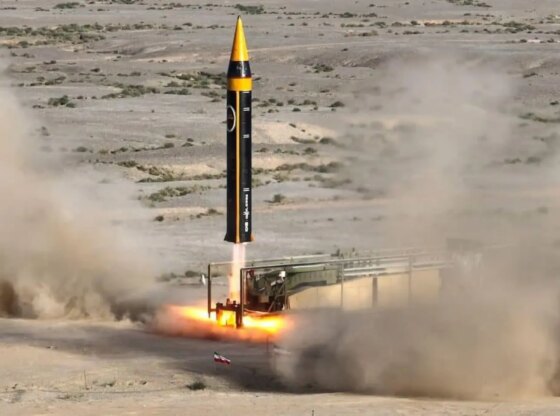
The Iranian state network Press TV released this Thursday images of the new Khorramshahr 4 missile and reported that it has been deployed in one of the new underground missile cities of the Revolutionary Guard.
The Khorramshahr 4 has a range of 2,000 kilometers, enough to reach Israel, and is capable of transporting a 1,500 kilogram warhead. Revealed on May 25, 2023, it has an approximate length of 13 meters, a diameter of 1.5 meters and a weight of around 30 tons.
This deployment occurs before this Friday Iran and the United States keep in Oman new nuclear negotiationsin the middle of the US military threats and with major differences over the Iranian missile arsenalwhich Washington wants to limit in the face of opposition from Tehran.
⚡️⭕️Iranian television broadcasts scenes of the new Khorramshahr 4 missile, confirming its entry into the operational maturity stage from within the new missile cities of the Islamic Revolutionary Guard, which was unveiled last night
The speed of the Khorramshahr 4 missile… pic.twitter.com/gJ8kD7aL8z— Middle East Observer (@ME_Observer_) February 5, 2026
The meeting is scheduled for 10:00 a.m. Omani time (one in the afternoon Spanish time) in Muscat, and will bring together the Iranian Foreign Minister, Abás Araqchí, and the White House special envoy, Steve Witkoffin which it would be the first contact between representatives of Washington and Tehran since the Iranian-Israeli war in June.
Regarding this Friday’s meeting, the start of another conflict is planned given the threats by US President Donald Trump to intervene militarily in the Persian country if an agreement is not reached that prevents the Islamic Republic from developing nuclear weapons.
These threats have been accompanied by deployment of the aircraft carrier USS Abraham Lincoln and its battle group – made up of three missile destroyers – near Iranian waters in the Persian Gulf after Trump claimed he was going to help demonstrators in the protests that shook the country in January.
The specter of war in the region has caused a intense diplomatic activity in recent days with the foreign ministers of Egypt, Qatar, Turkey and Saudi Arabia trying to mediate between the two historical rivals who could not agree on the location of the negotiations.
After agreeing to a kind of summit in Istanbul with other countries in the region, according to US mediaIran later asked to move the meeting to Muscat and only with Iranian and American representatives.
Differences on the topics to be addressed
If they have managed to finalize the date and place of the meeting, it seems that they do not agree on the agenda with differences in what they are willing to negotiate.
The Secretary of State of the United States, Marco Rubioinsisted on Wednesday that the agenda must include, in addition to the Iranian nuclear program, the limitation of its ballistic missiles and his support for regional groups of Hamas, Hezboá and the Houthis of Yemen, the so-called Axis of Resistance.
Araqchí, meanwhile, assured a few days ago in Istanbul that TEhran is not willing to negotiate its powerful ballistic missile programwhich has projectiles with a range of 2,000 kilometers, enough to reach Israel.
These same differences were already raised in the negotiations that the two countries held last year in Muscat, with Oman as an intermediary, but which came to an end after the start of the war between Iran and Israel in June, and in which Washington participated with the bombing of Iranian nuclear facilities, which has paralyzed Iran’s uranium enrichment capacity.
Trump reiterated on Wednesday the threats against the Persian country and assured that the Iranian supreme leader, Ali Khamenei, “he should be very worried” in an interview with NBC.
“I think you should be very worried. As you already know, they are going to negotiate with us,” the president explained.