

The keys
nuevo
Generated with AI
nuevo
Generated with AI
The United States and Russia negotiate on the horn an agreement so that the world does not face a new atomic rearmament. This Thursday, On the same day that START III or New START expires, it has been leaked that the delegations of both powers have discussed in Abu Dhabi a possible extension of about six months of the treaty that regulates the nuclear weapons of Washington and Moscow.
According to the portal Axiosthe contacts have been registered on the margins of the trilateral negotiations held in the Emirati capital on peace in the war in Ukraine, in which the special envoys of Donald Trump: Steve Witkoff y Jared Kushner.
The extension of START III, in force since 2010 and which was already renewed in 2021 for five more years, has been addressed in the last 24 hours, practically on the horn of his expiration. Sources cited by Axios They assure that the agreement is not closed and that the draft plan would still require the signature of both Trump and his Russian counterpart, Vladimir Putin.
The treaty established a limit on the number of strategic nuclear weapons, with a maximum of 1,550 warheads and 700 ballistic systems on land, sea or air for Washington and Moscow. Currently, the US has 1,770 warheads deployed and Russia, 1,718. Both powers concentrate 87% of the nuclear weapons that exist in the world, which includes the United Kingdom, France, China, India, Pakistan, North Korea and Israel.
If the Kremlin has been warning for months that the New START deadline was approaching its end, the White House has been more skeptical because does not limit China’s atomic powerwith a much smaller arsenal but which in recent years has increased significantly.
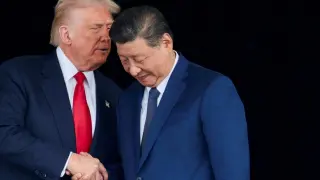
A position that this Wednesday reiterated Marco Rubiothe Secretary of State, saying that it is “impossible” for nuclear arms control in the 21st century to be effective without including Beijing. But China, so far, has not shown interest in joining the treaty, which would limit its program. Trump and Xi Jinping spoke by phone yesterday, but neither of their two cabinets reported that this issue had been addressed.
“Our initiative to maintain the limits for a year, even after the expiration of that document, has not been answered,” Kremlin spokesman Dmitri Peskov lamented on Monday. Nevertheless, Russia respects Beijing’s position: “Chinese friends maintain that their nuclear potential is not comparable to that of the US and Russia. And that is why they do not want to participate in the negotiations.”
Signed in April 2010 in Prague by the then presidents of the United States and Russia, Barack Obama y Dmitry MedvedevSTART III came into force in February 2011 after the ratification of the document by both countries, marking the horizon of a decade to control the arsenals of the two largest nuclear powers.
The New START replaced the Moscow Treaty or SORT, signed in 2003, and gave continuity to the START I of 1991 – in force since 1994 – and the failed START II project, which was never materialized due to the lack of consensus between the parties.
The treaty also required notifications prior to the launch of missiles subject to its terms and established a validity of ten years, extendable by mutual agreement, as occurred in 2021, when it was extended for an additional five years.